 Imagine waking up every morning, reading your phone, driving to work, or watching your children play without noticing that your eyesight is slowly changing. Everything seems normal because your central vision is still clear. However, around the edges, your vision may already be disappearing little by little. This is exactly why glaucoma is often called the “Silent Thief of Sight.” It usually develops without pain and without obvious warning signs. Many people only discover the disease after permanent vision loss has already occurred. The most worrying part is that vision lost due to glaucoma cannot usually be restored.
The good news is that early diagnosis can help slow or prevent further vision loss. That’s why regular Glaucoma Treatment in Faridabad begins with timely eye examinations and proper diagnostic testing. At Dr. Ruchi Eye Clinic, patients receive comprehensive glaucoma evaluations using modern diagnostic technology under the guidance of Dr. Ruchi Pahuja, who has more than 30 years of clinical experience in ophthalmology. The clinic focuses on early detection, personalized care, and long-term monitoring to help protect healthy vision. If you have ever delayed an Eye Check-up in Faridabad because your eyes “feel fine,” this article is for you.
What Is Glaucoma and Why Do So Many People Miss It?
Glaucoma is a group of eye diseases that damage the optic nerve, which carries visual information from your eyes to your brain. Most people think that glaucoma always causes pain or sudden blindness. In reality, the most common type develops very slowly. During the early stages, you may continue reading, driving, and working without realizing that your side vision is gradually disappearing. That is why thousands of people discover glaucoma only after significant vision has already been lost.
Many patients tell us:
- “I thought my eyesight was normal.”
- “I didn’t notice anything unusual.”
- “I only came because someone asked me to get my eyes checked.”
Unfortunately, glaucoma often gives people very little warning. Regular visits to an Eye Specialist in Faridabad are one of the best ways to identify glaucoma before it causes permanent damage.
Why Is Glaucoma Called the Silent Thief of Sight?
Think about locking your home every night. If someone quietly removed one brick every day, you probably wouldn’t notice at first. Weeks later, the wall would become weak, even though everything looked normal in the beginning.
Glaucoma behaves in a similar way. Instead of suddenly affecting your vision, it slowly damages the optic nerve over time. Your brain naturally adjusts to the gradual vision loss. As a result, many people never realize anything is wrong until the disease has already reached an advanced stage.
This is why delaying Glaucoma Treatment in Faridabad can be risky.
Without early diagnosis:
- Side vision slowly disappears.
- Daily activities become difficult.
- Driving becomes less safe.
- Reading may become harder.
- Permanent blindness may eventually occur.
The reassuring news is that regular eye examinations can detect glaucoma before these serious problems develop. At Dr. Ruchi Eye Clinic, modern investigations such as OCT Scan, Eye Pressure Testing, Visual Field Testing, and Fundus Imaging help identify glaucoma during its earliest stages.
Could You Have Glaucoma Without Knowing It?
The simple answer is yes. Many patients with glaucoma experience no symptoms for several years. You may continue your normal routine while the disease quietly damages your optic nerve.
Ask yourself these questions:
- Do you often bump into objects beside you?
- Have you started turning your head more while walking?
- Do you struggle to notice people approaching from the side?
- Does driving at night feel different than before?
- Have family members mentioned that you seem to miss things around you?
These changes are often very gradual, making them easy to ignore. That is why Glaucoma Treatment in Faridabad always begins with proper diagnosis rather than waiting for symptoms to become severe. If you are above 40 years of age, have diabetes, high blood pressure, or a family history of glaucoma, scheduling an Eye Check-up in Faridabad is one of the most important steps you can take to protect your vision.
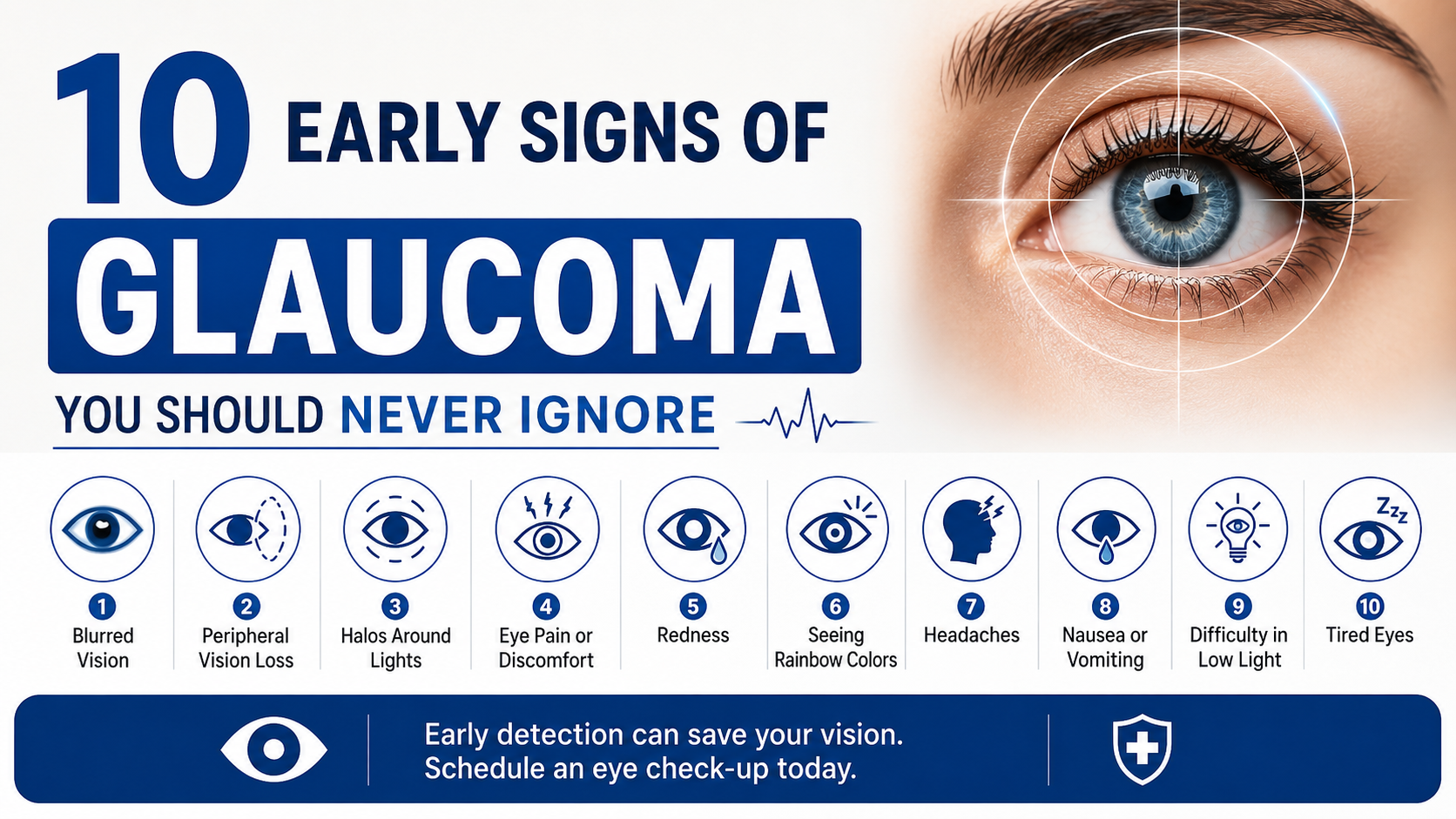
1. Are You Slowly Losing Your Side Vision?
 This is one of the earliest and most common signs of glaucoma. Unlike blurred central vision, side vision usually disappears so gradually that people rarely notice the change. Imagine walking through your home and occasionally brushing against a chair. Or driving and failing to notice a vehicle approaching from the side. These situations may seem unimportant at first. However, they could indicate that your peripheral vision is becoming smaller.
Many patients only realize this after the condition has progressed. If you notice changes in your side vision, do not ignore them. A comprehensive examination by an experienced Glaucoma Specialist in Faridabad can identify the cause before more vision is affected.
2. Do You Frequently Experience Blurred Vision?
Blurred vision does not always mean you need stronger glasses. Sometimes it may be related to glaucoma or another eye condition affecting the optic nerve. Perhaps you notice that reading becomes difficult during the evening. Maybe road signs look unclear while driving. Or your eyes take longer to focus after using a computer. Although blurred vision has many possible causes, it should never be ignored.
At Dr. Ruchi Eye Clinic, every patient receives a detailed examination to determine whether glaucoma, cataracts, refractive errors, retinal disease, or another condition is responsible for the symptoms. Early diagnosis allows Glaucoma Treatment in Faridabad to begin before permanent vision loss develops.
3. Do You See Halos Around Lights at Night?
Have you ever looked at a streetlight or the headlights of an oncoming vehicle and noticed colorful rings around the light? Occasional halos may occur for several reasons. However, when they appear repeatedly or are associated with eye pain, blurred vision, or headaches, they should be evaluated promptly.
Some types of glaucoma can increase eye pressure rapidly and produce symptoms such as:
- Halos around lights
- Blurred vision
- Eye pain
- Nausea
- Severe headache
These symptoms require immediate medical attention. Visiting an Eye Specialist in Faridabad without delay can help prevent serious damage to the optic nerve. At Dr. Ruchi Eye Clinic, advanced glaucoma investigations help determine whether elevated eye pressure or another eye condition is causing these symptoms.
4. Do Your Eyes Feel Constant Pressure or Discomfort?
Not everyone with glaucoma experiences pain. In fact, the most common type usually develops without any discomfort. However, some people notice a feeling of heaviness, pressure, or tiredness in their eyes that does not improve with rest. You may think it is because of long hours on the computer or lack of sleep. While that may be true in some cases, persistent discomfort should never be ignored.
Ask yourself:
- Do your eyes feel unusually heavy by evening?
- Do you feel pressure behind your eyes?
- Does the discomfort return every day?
Although these symptoms do not always mean glaucoma, they deserve an evaluation by an experienced Eye Specialist in Faridabad. At Dr. Ruchi Eye Clinic, every patient receives a detailed eye examination to identify the real cause of persistent eye discomfort. Early evaluation allows Glaucoma Treatment in Faridabad to begin if glaucoma is detected.
5. Have You Started Getting Frequent Headaches?
 Headaches are common, and most are not related to eye diseases. However, headaches combined with blurred vision, eye discomfort, or halos around lights should not be ignored. Imagine returning home after work with a headache almost every evening. You blame stress, your computer, or lack of sleep. Weeks pass, but the headaches continue. Sometimes, increased eye pressure can contribute to these symptoms.
If headaches become frequent along with vision changes, visiting a Glaucoma Specialist in Faridabad is a wise decision. Early testing can help determine whether glaucoma or another eye condition is responsible.
6. Does Bright Light Make Your Eyes Uncomfortable?
Many people notice discomfort while driving on sunny days or when facing bright headlights at night. If your eyes become unusually sensitive to light, it may indicate an underlying eye problem that requires evaluation.
You may notice:
- Squinting more than usual
- Difficulty driving during the day
- Discomfort under bright indoor lights
- Trouble adjusting between light and dark environments
Although light sensitivity has many causes, it should never be ignored when it appears along with other visual symptoms. A complete Eye Check-up in Faridabad can help identify whether glaucoma or another eye condition is affecting your vision.
7. Have You Noticed Sudden Vision Changes?
Most types of glaucoma develop slowly, but some forms can appear suddenly and require emergency treatment.
If you suddenly experience:
- Severe eye pain
- Sudden blurred vision
- Halos around lights
- Nausea or vomiting
- Rapid vision loss
seek immediate medical care. These symptoms may indicate angle-closure glaucoma, which is considered an eye emergency. Prompt Glaucoma Treatment in Faridabad can help reduce eye pressure and protect the optic nerve from permanent damage. Never wait for symptoms to improve on their own.
8. Is One Eye Becoming Weaker Than the Other?
Have you noticed that one eye seems clearer than the other?
Perhaps you close one eye while reading and suddenly realize that the other eye is not seeing as well. Many people dismiss this difference because the stronger eye compensates for the weaker one. However, unequal vision should always be evaluated.
At Dr. Ruchi Eye Clinic, advanced diagnostic tests help compare the health of both eyes and identify early glaucoma, retinal disease, cataracts, or other vision problems. Timely Glaucoma Treatment in Faridabad can help slow disease progression before further vision is lost.
9. Do You Have a Family History of Glaucoma?
Family history is one of the strongest risk factors for glaucoma. If your parents, brothers, sisters, or close relatives have glaucoma, your own risk may be significantly higher.
Many patients say:
“My father had glaucoma, but I never thought it could affect me.”
Unfortunately, glaucoma often runs in families.
If someone close to you has been diagnosed with glaucoma, regular visits to a Glaucoma Specialist in Faridabad become even more important. Routine monitoring allows doctors to detect changes before symptoms appear.
10. Are You Above 40 and Skipping Regular Eye Check-ups?
One of the biggest mistakes people make is waiting until their vision becomes blurry before visiting an eye doctor. Unfortunately, glaucoma often causes no warning signs during the early stages. If you are over the age of 40, regular eye examinations become increasingly important.
You should be especially careful if you also have:
- Diabetes
- High blood pressure
- A family history of glaucoma
- Long-term steroid use
- Previous eye injuries
A routine Eye Check-up in Faridabad takes very little time, but it may help protect your eyesight for years to come.
Why Should You Never Ignore These Early Signs of Glaucoma?
Vision is something we often take for granted until it begins to change. Many people delay their eye examination because they feel busy or believe the symptoms will disappear on their own. However, glaucoma behaves differently. It can quietly damage the optic nerve while you continue living your normal life.
Ignoring the early signs may eventually lead to:
- Permanent peripheral vision loss
- Difficulty driving safely
- Trouble recognizing people
- Reduced independence
- Permanent blindness in advanced cases
The encouraging news is that early diagnosis often allows glaucoma to be managed successfully. That is why timely Glaucoma Treatment in Faridabad focuses on protecting the vision you still have rather than trying to restore vision that has already been lost.
If you notice any of these warning signs, do not wait.
A comprehensive examination at Dr. Ruchi Eye Clinic can identify glaucoma early through advanced tests such as:
- Eye Pressure Test
- OCT Scan
- Visual Field Test
- Fundus Imaging
- Comprehensive Eye Examination
These investigations help Dr. Ruchi Pahuja understand the health of your optic nerve and recommend the most appropriate treatment plan based on your individual needs.
Remember, glaucoma cannot usually be felt in its early stages but it can often be detected through timely eye examinations. Taking action today may help protect your eyesight for many years to come.
Your Eyesight Is Precious—Don’t Wait Until It’s Too Late
 Our eyesight helps us enjoy life’s simplest moments. We use it to read a book, recognize a loved one’s smile, drive safely, work confidently, and experience the world around us. Because vision changes often happen slowly, many people assume everything is fine until daily activities become difficult. Glaucoma is different from many other eye conditions because it usually develops quietly. By the time symptoms become obvious, permanent optic nerve damage may already have occurred. This is why routine eye examinations are so important, especially if you are over 40, have diabetes, high blood pressure, or a family history of glaucoma. The encouraging news is that Glaucoma Treatment in Faridabad is much more effective when the disease is detected early. Although lost vision usually cannot be restored, timely diagnosis and proper treatment can often slow or prevent further vision loss.
At Dr. Ruchi Eye Clinic, every patient receives compassionate care from Dr. Ruchi Pahuja, supported by advanced diagnostic technology and more than 30 years of clinical experience. Whether you have noticed the early signs of glaucoma or simply want peace of mind, a comprehensive Eye Check-up in Faridabad can help identify problems before they become serious. Do not wait for symptoms to become severe. Protect your eyesight today because healthy vision is one of the greatest gifts you have.
Frequently Asked Questions
1. What are the earliest signs of glaucoma?
The earliest signs may include gradual loss of side vision, blurred vision, halos around lights, frequent headaches, or mild eye discomfort. However, many people experience no symptoms initially. Regular Glaucoma Treatment in Faridabad begins with timely eye examinations that help detect glaucoma before noticeable vision loss occurs.
2. Can glaucoma develop without symptoms?
Yes. Glaucoma is often called the “silent thief of sight” because it can damage the optic nerve without causing pain or obvious symptoms. Regular visits to an Eye Specialist in Faridabad help detect the disease early and reduce the risk of permanent vision loss.
3. At what age should glaucoma screening begin?
Most adults should have regular glaucoma screening after the age of 40. People with diabetes, high blood pressure, or a family history of glaucoma may need earlier examinations. Dr. Ruchi Eye Clinic recommends personalized screening schedules based on individual risk factors.
4. Can glaucoma cause blindness?
Yes. If glaucoma is left untreated, it can gradually damage the optic nerve and lead to permanent blindness. The good news is that Glaucoma Treatment in Faridabad can often slow disease progression when the condition is diagnosed at an early stage.
5. Is glaucoma hereditary?
Yes. Having a parent or sibling with glaucoma increases your risk of developing the disease. If glaucoma runs in your family, regular eye examinations with a Glaucoma Specialist in Faridabad are strongly recommended for early detection and long-term monitoring.
6. How is glaucoma diagnosed?
Glaucoma is diagnosed through a combination of tests, including an Eye Pressure Test, OCT Scan, Visual Field Test, Fundus Imaging, and a comprehensive eye examination. Dr. Ruchi Pahuja carefully reviews all findings together because no single test alone can confirm glaucoma.
7. How often should I have my eyes checked?
Most adults should have a comprehensive Eye Check-up in Faridabad every one to two years. People over 40 or those with glaucoma risk factors may require more frequent examinations, depending on the advice of their ophthalmologist.
8. Can glaucoma be cured?
There is currently no permanent cure for glaucoma. However, early Glaucoma Treatment in Faridabad can help control eye pressure, slow optic nerve damage, and protect the remaining vision through medications, laser treatment, surgery, and regular follow-up care.